

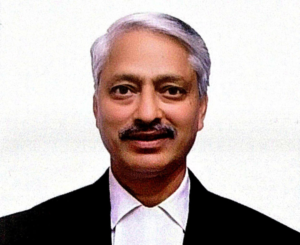
By: Ram Chander Sankhla, Advocate | Former Chief Commissioner, GST & Customs| Managing Partner, Sankhla Law associates.
- Whenever investigating agencies in the tax departments — such as the Directorate of Revenue Intelligence (DRI), Directorate General of GST Intelligence (DGGI), Special Investigation and Intelligence Branch (SIIB), Directorate General of Investigation (DGI), or Enforcement Wing — book cases of high-profile tax evasion, these are announced with great publicity. Officials and their supervisors, responsible for such bookings, are often honoured with President’s Awards, Distinguished Service Awards, or other commendations. However, the eventual outcomes of these cases are rarely reported. It remains unclear whether they withstood judicial scrutiny or collapse at the very first stage. Where these fail, the precise reasons for such failures are seldom disclosed.
- One such case was booked by zonal unit of DGGI Mumbai in the year 2022 against the Tata Sons Pvt Limited (Tata), involving the alleged IGST (Integrated Goods & Service Tax) evasion of ₹1542 crores, by invoking Section 74 of the Central Goods and Services Tax Act, 2017 (CGST Act). It was alleged that Tata did not discharge the due IGST under reverse charge mechanism (RCM) when M/s Docomo, the one-time shareholder in the TTSL (Tata Teleservices Limited) ‘tolerated the act’ and received Rs. 8450 crores from Tata on account of such ‘toleration of an act’.
- The issue involved was whether the settlement through arbitration between Tata and Docomo in the proceedings filed by Docomo under section 47 and 48 of the Arbitration and Conciliation Act 1996 (ACA), under which the arbitral award for damages stood paid by Tata, would amount to supply within the Entry 5(e) of schedule II of the CGST Act. The related and more relevant question arose was if this entry 5(e) of schedule-II can survive independent of section 7 of the CGST Act, which defines scope of supply.
- Hence the other heading of this article could be, ‘CAN SCHEDULE-II SURVIVE DE-HORS SECTION 7 OF THE CGST ACT’.
- Coming back to the starting para of this article, it is interesting to note that the show cause notice (SCN) issued in this case was quashed by Hon’ble High Court at Bombay, in the Writ Petition No. 4914 of 2022 and Interim Application (L) No. 17868 of 2023, filed by Tata, vide order dated 30.04.2026 -(2026) 42 Centax 106 (Bom.). The Hon’ble Court after detailed discussion found that the impugned SCN is not maintainable and rejected the contention of the revenue that there is alternate remedy available to the petitioner. The court did not, found it worth to direct the petitioner to file the reply to the SCN and wait for the adjudication to be completed. It termed the proceedings as ABSURD.
- So, such a high-profile tax evasion case got quashed at the show cause stage itself being termed as absurd. It may be safely presumed that the investigating officials/their supervisory authorities, have been swayed by the magnitude of revenue allegedly involved but the merit of the case. Though, it is surprising that, even after 75 years of independence, cases are booked on the basis of alleged revenue involved but merit.
WHAT THE FACTS SPEAK:
- There was a contractual dispute between Tata and Docomo, which resulted in an award of damages to the extent of ₹8450 crores passed by LCIA (London Court of International Arbitration) vide its order dated 22nd June 2016. The award which is an international commercial award is governed by part-II of the Arbitration and conciliation Act 1996 (ACA) and was enforced by Docomo in terms of section 48 and 49 of this Act. In the proceedings initiated by Docomo before Delhi High Court under the ACA read with Order XXI of the CPC (Civil Procedure Code), it was held by the Delhi High Court that the award was enforceable as a decree of the court.
- Additionally, Docomo also filed execution proceedings in the Courts of United Kingdom and United States of America for attachment of assets of the Tata in Jaguar Land Rover and other Tata companies. Since the award was fully satisfied by Tata making payment of damages of ₹8450 crores as awarded by the arbitral tribunal, the execution proceedings filed before the foreign courts were withdrawn. To this effect, Tata and Docomo filed consent terms before the Delhi High Court agreeing that as the award had stood satisfied, Docomo agreed that the execution proceedings filed before the UK and USA courts would be withdrawn. For such withdrawal, no consideration was independently paid to Docomo, which was an obvious outcome of discharge of damages amount by Tata.
- Initially, the enquiry started in 2017 and later DGGI zonal unit issued a pre-notice consultation in form DRC-01A on the ground that by withdrawing the execution proceedings, the Docomo had tolerated this act, which has attracted a levy of GST under entry number 5(e ) of Schedule-II of the CGST Act, which provides for “agree to the obligation to refrain from an act, or to tolerate an act or a situation, or to do an act”.
- On the petition filed by the Tata against such pre-notice consultation in DRC-01A, the Hon’ble Court directed the petitioner to file their detailed reply and directed the department to take time bound decision on such reply. It is worthwhile to state that the petitioner raised the jurisdictional issue besides stressing that the issue being raised has already been settled by the CBIC vide their Circulars No.178/10/2022 dated 3 August 2022 and No. 214/1/2023-Service Tax dated 28 February 2023.
- Tata also submitted that apart from the board circulars, it is settled position in law that damages are the fate of the court and they do not represent consideration for any separate independent agreement for tolerating any act. They relied on the decision of the Supreme Court in UOI vs Raman Iron Foundry – 1974 SCC (2) 231 and Iron and Hardware (India) Company v. Shamlal and Brothers – 1954 SCC online Bom. 5. The petitioner also relied upon section 73 and 74 of Indian Contract Act to stress that there was a contractual breach and whatever decree was given was for breach of contract and hence the damages were given, which cannot be treated as consideration or transaction value for supply of services.
- One of the important legal contentions raised was that ‘GST can be levied only if there is a supply under section 7 and 7 (1A) of the CGST Act. If there is no supply under section 7 and 7 (1A), entry 5(e) of schedule-II cannot be relied on independent of these sections.’
- On the contrary, the revenue contended that there is an alternate remedy available as there are questions of arguable facts which need to be gone through and adjudicated by the proper Adjudicating Authority. It was also submitted that the board circulars as quoted are not applicable in the favour of the petitioner. That the DGGI has proper jurisdiction to conduct such investigation and issue the SCN.
- Accordingly, the show cause notice was issued to the Tata, under section 74 of the CGST Act, after invoking the provisions of Fraud, Suppression & Misdeclaration. One of the relevant paras of the impugned SCN is reproduced, as
“In the Instant case, DOCOMO, as part of its joint consent application filed in the Hon’ble High Court of Delhi, agreed to suspend and later withdraw its enforcement proceedings which it had initiated in the courts in the UK and the US, threatening to attach properties of Tata’s global companies like Jaguar Land Rover and Tata Steel Europe. The act here being that of not continuing with the proceedings initiated against Tata which were currently pending In UK and in the US. The act of DOCOMO also appears to be one of tolerance with respect to the breach of the SHA by TSPL (sic-TTSL) & others. Thus, from the above it appears to be an activity agreeing to an obligation of refraining from an act, the act here being that of not continuing with the proceedings initiated against Tata which were pending in UK and in the US. The activity is thus, not in the nature of only tolerating the breach of contract as referred by TSPL.” (emphasis supplied)
REASONS FOR QUASHING THE SCN:
- The High Court reasoned and to quote,
“On a plain purport of the relevant provisions, it would not require any deep diving/elaboration to observe that the recovery of the amounts under a decree of the Court and for that matter an arbitral award, which is for damages by any stretch of imagination ought not to amount to ‘supply of services’. The reason being multiple in the facts of the present case. We may observe that as a general principle, under the scheme of recovering amounts for breach of contract by seeking damages, either in a civil suit or in arbitral proceedings, is a part of the requirement of law or the rule of law, even when it comes to compliance of an arbitral award of a foreign arbitral tribunal. Any award of damages being recognized, in the context of its enforcement applying the Indian law, namely, the ACA and recognition of the principles for award of damages under the Indian Contract Act form part of a legal scheme integral to the arbitral process. ……..”.
- The reasoning continued that, similarly, the proceedings which are incidental, integral to the execution of the decree and falling under the decree also cannot be considered to be alien to the decree, as such proceedings certainly partake the character of the original/principal proceedings, namely, execution of a decree.
- As far as the moot question, if the provisions of Schedule-II, Entry 5(e) can exist without the provisions of supply being fulfilled under section 7, the Hon’ble Court categorically held that the Entry 5(e) cannot be read beyond the purview of principal provision, namely section 7 of the CGST Act. That, reading Entry 5(e) de-hors, the provision of section 7 would amount to an erroneous reading of this provision. It was also held that neither there is an independent agreement involving any consideration nor any separate consideration has been promised by Tata to be paid to Docomo so as to even remotely attract the provisions of section 7, read with Entry 5(e) of the CGST Act. It went on to record that when section 7 itself is not attractive, there is no question of the provisions of Entry 5(e) of schedule-II of the Act and the corresponding provisions of IGST Act being made applicable.
- It was also opined that if the logic adopted by the revenue is accepted, then in every settlement of every money decree where parties are before the court and agree to a course of action purely under the decree without creating any independent obligation would be required to be regarded as supply of service as sought to be alleged on behalf of the revenue. This would amount to creating a situation wholly not recognised by law, in the context of the relevant provisions of the CGST Act.
- While relying on para 7.1.4 and 7.1.5 of the circular 178/10/2022 dated 3rd August 2022, it was concluded that in the present case, there is no independent agreement for tolerating an act. It was also held that it was clarified in the said circular that whether the damages are liquidated or not, the damages shall remain damages. Whereas relying on circular 214/1/2023 – ST dated 28th February 2023, and specifically on para 5 & 6, it was decided that even the Board (CBIC) has, in the past, in many similar cases, taken the same view as held in the present case.
- It may be noticed that in paras 5 & 6 of the circular 214/1/2023 – ST dated 28th February 2023, it was made crystal clear by the CBIC that it has accepted similar decisions, in the past for many tax payers. In few cases, CBIC decided not to pursue similar cases in the Supreme Court. Therefore, these paras deserve to be reproduced,
“5. The issue also came up in the CESTAT in Appeal No. ST/50080 of 2019 in the case of M/s Dy. GM (Finance) Bharat Heavy Electricals Ltd in which the Hon’ble Tribunal relied on the judgment of divisional bench in case of M/s South Eastern Coal Fields Ltd v. CCE Raipur {2021(55) G.S.T.L 549(Tri-Del)}. Board has decided not to file appeal against the CESTAT order ST/A/50879/2022-CU[DB] dated 20.09.2022 in this case and also against Order A/85713/2022 dated 12.8.2022 in case of M/s Western Coalfields. Ltd. Further, Board has decided not to pursue the Civil Appeals filed before the Apex Court in M/s South Eastern Coalfields Ltd. supra (CA No. 2372/2021). M/s Paradip Port Trust (Dy. No. 24419/2022 dated 08-08-2022), and M/s Neyveli Lignite Corporation Ltd (CA No. 0051-0053/2022) on this ground.
6. In view of above, it is clarified that the activities contemplated under section 66E(e), i.e. when one party agrees to refrain from an act, or to tolerate an act or a situation, or to do an act, are the activities where the agreement specifically refers to such an activity and there is a flow of consideration for this activity. Field formations are advised that while taxability in each case shall depend on facts of the case, the guidelines discussed above and jurisprudence that has evolved over time, may be followed in determining whether service tax on an activity or transaction needs to be levied treating it as service by way of agreeing to the obligation to refrain from an act, or to tolerate an act or a situation, or to do an act. Contents of Circular No. 178/10/2022-GST dated 3rd August. 2022, may also be referred to in this regard.” (emphasis supplied).
- The Hon’ble Court also discussed the decision of the Tribunal in the case of South Eastern Coal fields Ltd.- 2021 (55) G.S.T.L. 549 (Tri.-Del), where the revenue had fastened upon South Eastern Coalfields, the appellant there under, a liability under section 65B read with section 66E(e ) of the Finance Act for the period July 2012 to March 2016, on the Ground that by collecting the said amount, the appellant had agreed to the obligation to refrain from an act or to tolerate the non-performance of terms of contract by the other party. Hon’ble Tribunal relied on Supreme Court judgement in case of CST V. Bhayana Builders – 2018 (10) GSTL 118 SC = 2018 (2) TMI 1325 SC, wherein it was held that any amount charged, which has no nexus with the taxable service and which is not a consideration for the services provided, does not form part of the value which is taxable under section 67 of the Finance Act. The Tribunal also considered the decision of the Supreme Court in Fateh Chand versus Bal Kishan Das- AIR 1963 SC 1405 on damages, held that it was not possible to sustain the view taken by the commissioner that the penalty amount, forfeiture of earnest money, deposit and liquidated damages were received by the appellant towards consideration for tolerating an act, leviable to service tax under section 66E(e) of the Finance Act.
THE PLEA OF ALTERNATE REMEDY WAS REJECTED:
- As far as the plea of alternate remedy, advanced by the revenue was concerned, it was held that the principles of law in regard to the parties being relegated to alternate remedy are well-settled. It is purely the discretion of the Court whether its writ jurisdiction needs to be exercised or not. Such discretion is required to be judicially exercised. The Hon’ble High Court relied on the decision of the Supreme Court in Godrej Sara Lee Limited v. Excise and Taxation Officer (2023) SCC OnLine SC 95 wherein on the Writ Petition to be entertained and maintainable, the Supreme Court held that the power to issue prerogative writs under Article 226 is plenary in nature. Any limitation on the exercise of such power must be traceable in the Constitution itself. Profitable reference in this regard may be made to Article 329 and ordainments of other similarly worded articles in the Constitution. Article 226 does not, in terms, impose any limitation or restraint on the exercise of power to issue writs. While it is true that exercise of writ powers despite availability of a remedy under the very statute which has been invoked and has given rise to the action impugned in the writ petition ought not to be made in a routine manner, yet, the mere fact that the petitioner before the high court, in a given case, has not pursued the alternative remedy available to him/it cannot mechanically be construed as a ground for its dismissal.
- And para 6 of the judgement in Godrej Sara Lee Limited v. Excise and Taxation Officer (2023) SCC OnLine SC 95 is worth reproducing,
“At the end of the last century, this Court in paragraph 15 of its decision reported in (1998) 8 SCC 1 (Whirlpool Corporation v. Registrar of Trade Marks, Mumbai and Others) carved out the exceptions on the existence whereof a Writ Court would be justified in entertaining a writ petition despite the party approaching it not having availed the alternative remedy provided by the statute. The same read as under:
-
-
- where the writ petition seeks enforcement of any of the fundamental rights;
- where there is violation of principles of natural justice;
- where the order or the proceedings are wholly without jurisdiction; or
- where the vires of an Act is challenged.”
-
- Accordingly, this plea of alternate remedy was rejected and the reason being, that when the Court have come to a considered conclusion, that the officer had no jurisdiction to issue a SCN, so as to bring such demand within the purview of Section 7(1)(c) read with Schedule II Entry 5(e).
WILL THE REVENUE APPROACH SUPERIOR COURT:
- Well, it is, any time, difficult to respond to such quary. However, one thing is certain that the CBIC in its Circular No. 214/1/2023-Service Tax dated 28 February 2023, accepted many decisions, similarly placed. Even, in few cases it withdrew its appeal before Hon’ble Supreme court. So, it will not be easy to approach superior court for relief either on facts or law.
- The next question and more important is, WHO STOOD GAINED BY BOOKING SUCH CASES. It seems to be lose-lose situation for all concerned. The public at large lost its money which it pays through taxes, the precious and irreversible time of Courts and taxpayers. But the Field officers can not be blamed, entirely, for such state. Because, the Petitioner Tata, first approached the CBIC vide its detailed representation, followed by reminders, there was deafening silence on part of the Board. Thus, it is high time the TOP THINK TANK stands up and take responsibilities. Till then, things will remain as it is, …a lose-lose situation for the INDIAN ECONOMY.
- Can these situations justify the Ends like EASE OF DOING BUSINESS.
AND THE ‘VIKSIT BHARAT’ WILL EXIST ONLY IN DREAMS, IF NO CORRECTIVE STEPS ARE TAKEN.
‘JAI HIND’.
DISCLAIMER: The views and opinions expressed in this article are solely those of the authors and do not necessarily reflect the official policy or position of any other individual, organization, employer or Firm. The information provided in this article is accurate and true to the best of the author’s knowledge, but there may be omissions, errors, or mistakes. The authors shall not be liable for any damages, losses, or injuries arising from the use of or reliance on the information presented in this article. Readers are advised to verify any information provided here and to consult with appropriate professionals for specific advice tailored to their individual circumstances.
Comments (3)
It’s a in depth analysis of a high profile case. The Industry is facing pain of unnecessary litigations.
Honourable Sir !!!
It is to inform that I have also contested the same case at Honourable CESTAT SZB Chennai in 2023 AD wrto M/s. Chennai Metro Rail Ltd. (the copy of the FO is being sent and link was https://cestat.gov.in/weborders/file/chennai/252524 ). And I also know both the Circular dated 03.08.2022 and 28.02.2023 since then ….. So Judicial Pronouncements are not in Favour of the Department and same is also acknowledged by it, in its Circular dated 28.02.2023 ???
Moreover, I had also used the case of M/s. Whirlpool of “ALTERNATIVE REMEDY”, when I was posted at Allahabad Commissionerate in January 2023 AD, as I was ADC (Adjudication) over there. I had used this case, when one party instead of going to Resp. Commissioner (Appeals), had directly reached to Hon. Allahabad High Court, which I had finally won and the party was finally sent back to Resp. Comm (A) …
So, I also say “JAI HIND” along with Respected Sir …..
Many thanks pl.